

Breast Cancer Consultation in Montego Bay, Jamaica
Get physician-led guidance on your diagnosis, treatment recommendations, second opinions, supportive care and the questions you still need answered.
A breast cancer diagnosis can make every decision feel urgent at once.
You may already have a pathology report, scan results or a proposed treatment plan — and still be trying to understand what the findings mean or why a particular treatment has been recommended.
What type of breast cancer is it?
What stage is it?
What do ER, PR and HER2 mean?
Do I need surgery first?
Will I need chemotherapy or radiation?
Should I get another opinion?
Could treatment affect fertility or menopause?
Can nutrition or complementary care fit safely alongside treatment?
You do not need to understand all of this before you book. That is what the consultation is for.
Your pathology report tells an important part of the story.

The consultation starts with the information you already have — not with a pre-selected treatment. Dr. Andre may review:
- Tumour type
- Tumour grade
- Stage
- ER status
- PR status
- HER2 status
- Lymph-node findings
- Imaging & margins
- Genomic testing where relevant
- Current treatment recommendations
Understand the report. Then talk about the options.
What decisions are you trying to make?
Your diagnosis
What the pathology and imaging suggest — and what information may still be missing.
Understand what the tumour type, grade and stage actually describe, and whether any further testing or information is needed before a clear decision can be made.
Surgery
Questions around breast-conserving surgery, mastectomy, lymph-node surgery and reconstruction where relevant.
Walk through what each surgical option is meant to do, how it fits your individual case, and what questions are worth asking your surgeon before deciding.
Systemic treatment
Why chemotherapy, endocrine therapy, targeted therapy or other systemic treatments may be recommended depending on the cancer.
Explore the reasoning behind a systemic treatment recommendation — what it is meant to address, and how it fits with the rest of your plan.
Radiation
Why radiation may or may not form part of the treatment plan depending on the situation.
Understand when radiation tends to be recommended, when it may not be, and what the decision depends on in your individual case.
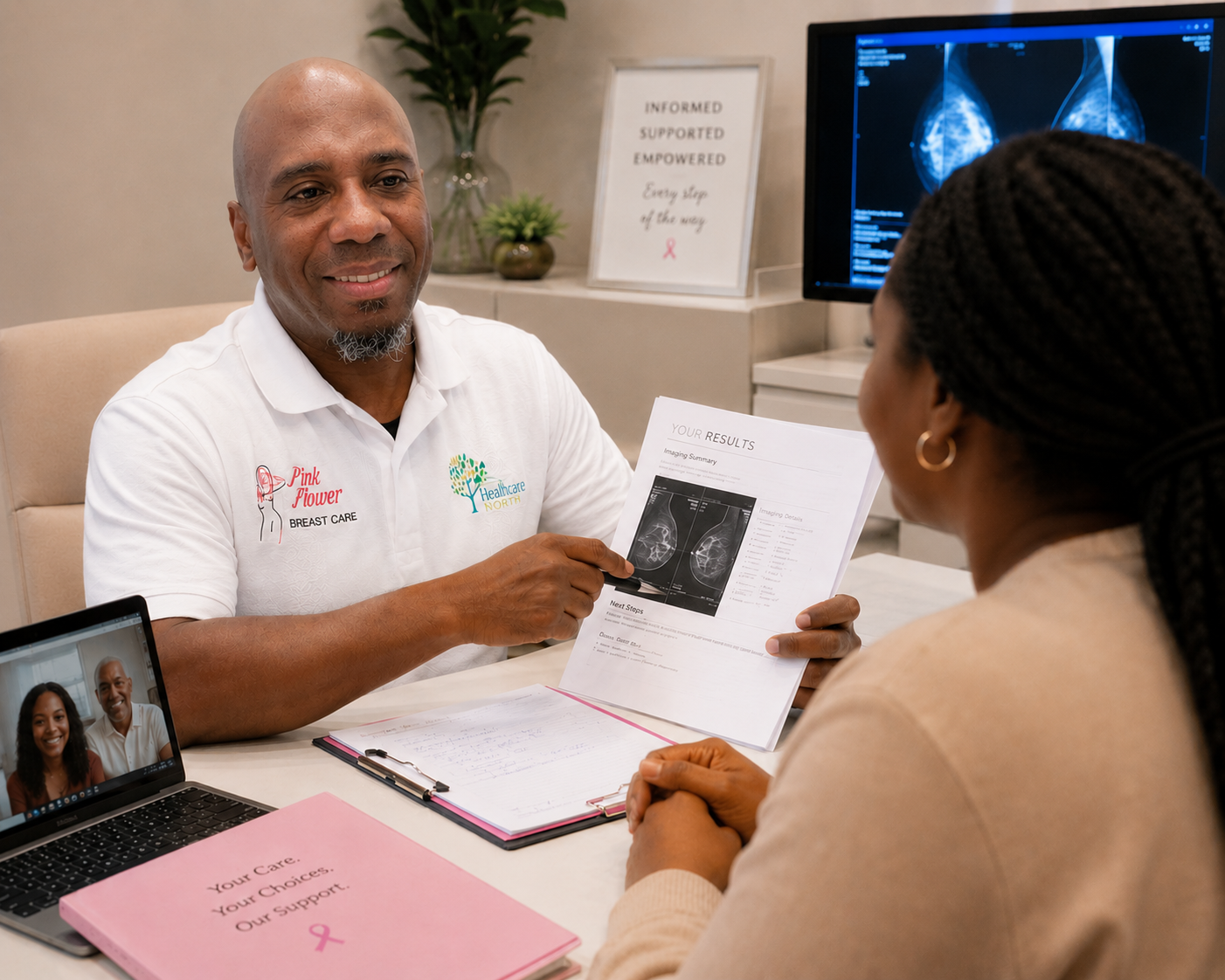
Still trying to make sense of the treatment plan?
Bring the reports you have. You do not need to organise everything perfectly before the consultation.
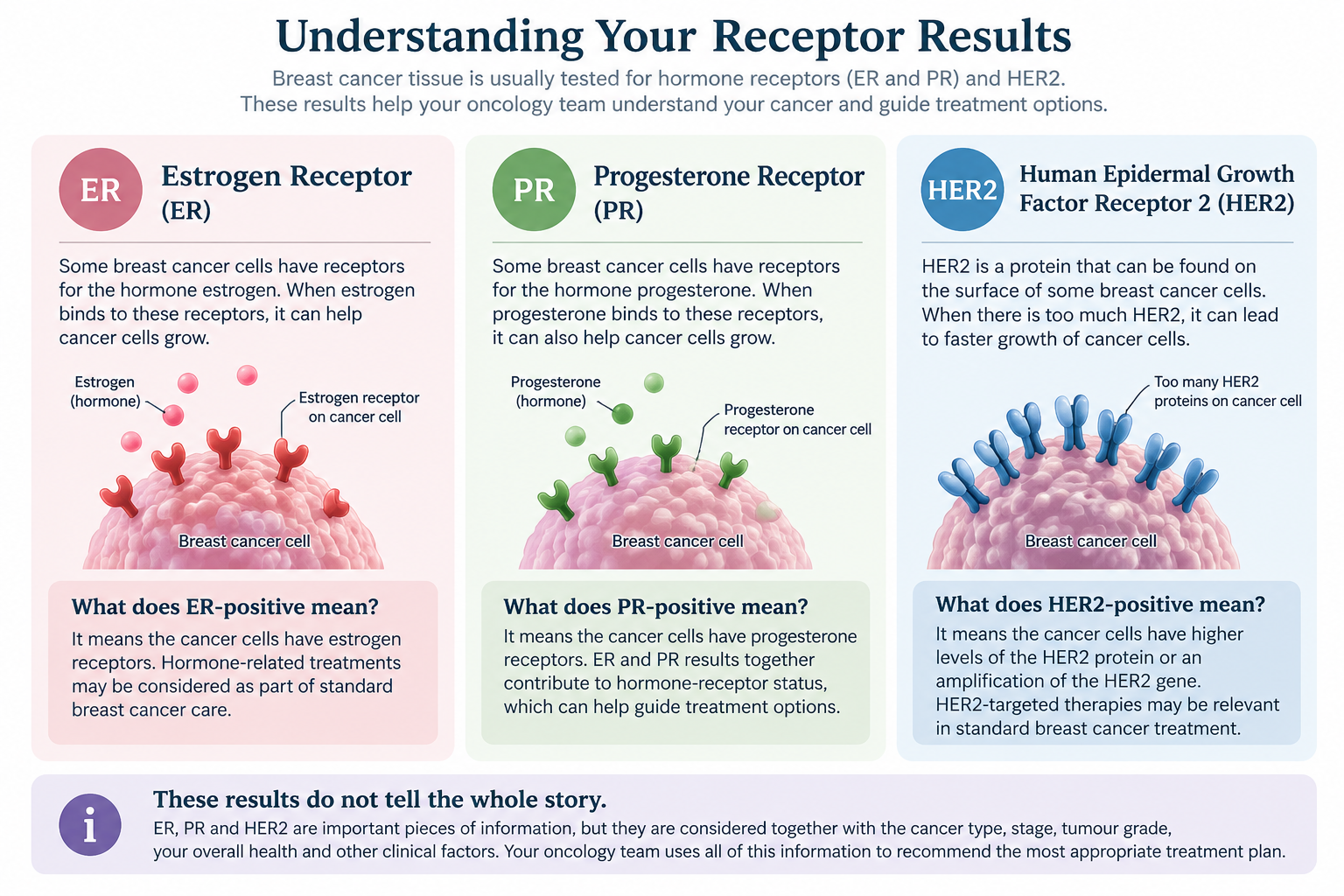
What do ER, PR and HER2 actually mean?
These markers help describe how the cancer behaves and may influence treatment choices. ER and PR show whether the cancer is driven by oestrogen or progesterone receptors — which can open the door to hormone-blocking (endocrine) therapy. HER2 describes a protein that some breast cancers produce in excess, which shapes whether a targeted treatment is relevant.
A “triple-negative” result means none of these three markers are present — not that the cancer is worse, just that the treatment path is different. Understanding your own receptor profile is one of the clearest ways to make sense of why a particular treatment was recommended.
These markers are read alongside stage, grade and your full picture — never in isolation.
Some treatment decisions are medical. Others are deeply personal too.

Decisions around breast-conserving surgery, mastectomy, reconstruction, body image and wellbeing carry both medical and personal considerations. There is rarely a single “right” answer — only the answer that fits you, your situation and what matters most to you.
A consultation is space to understand the medical side clearly, ask the personal questions that are hard to ask in a rushed appointment, and feel more settled about the direction you choose — whatever that direction is.
If fertility or early menopause matters to you, ask before treatment where possible.

Some breast cancer treatments can affect fertility, ovarian function, menstrual cycles and menopause symptoms — and how much depends on age and the treatment involved. These are reasonable things to want to understand before starting.
Asking early matters even when the answers are uncertain. Depending on your individual case, fertility-preserving options may sometimes be relevant to discuss before treatment begins.
No fertility outcome can be guaranteed. The aim is to ask the right questions at the right time, with honest guidance about what is and isn’t possible.

You can understand the recommendation before you commit to it.
A second medical perspective helps clarify what the recommendation is based upon:
- What has been recommended
- Why it was recommended
- What questions remain
- Whether additional information is needed
- What alternatives may be worth discussing
- How to prepare for your surgeon visit
A second opinion does not mean the original plan is wrong. Most of the time it simply adds confidence and peace of mind to the path you choose.

Cancer care is where Dr. Andre’s medical career began.
Dr. Andre Williams is a physician with postgraduate training in haematology and an oncology background. After years as a consultant in haematology and oncology, he pursued further international study in nutrition and selected complementary approaches. Today his practice at Teshuva Wellness brings that conventional oncology foundation together with integrative care — so breast cancer decisions are understood in full, not in fragments.
What if you also want to discuss nutrition or complementary care?

Many people want to care for the whole of themselves during treatment. These conversations can be part of your consultation:
These discussions always consider your current treatment, medication interactions, safety and the evidence behind each approach — never replacing appropriate breast cancer treatment.
What happens when you sit down with Dr. Andre?
Listen
Start with the diagnosis, the reports and the questions you are carrying.
Review
Pathology, imaging, medications and current treatment recommendations.
Clarify
Identify what is still unclear or what decision needs to be made.
Discuss
Consider the relevant options, limitations and supportive approaches.
Next Step
Agree on what makes sense from here.
You don’t need to know which treatment you need.

Start with the diagnosis, the reports and the decisions you are trying to understand.

The questions do not always stop once treatment begins.
Once treatment is underway, new questions can surface — around energy, side effects, recovery and what comes after. These are normal, and they can be discussed honestly:
No outcome can be promised. The aim is practical, honest support for where you actually are — during treatment and into recovery.
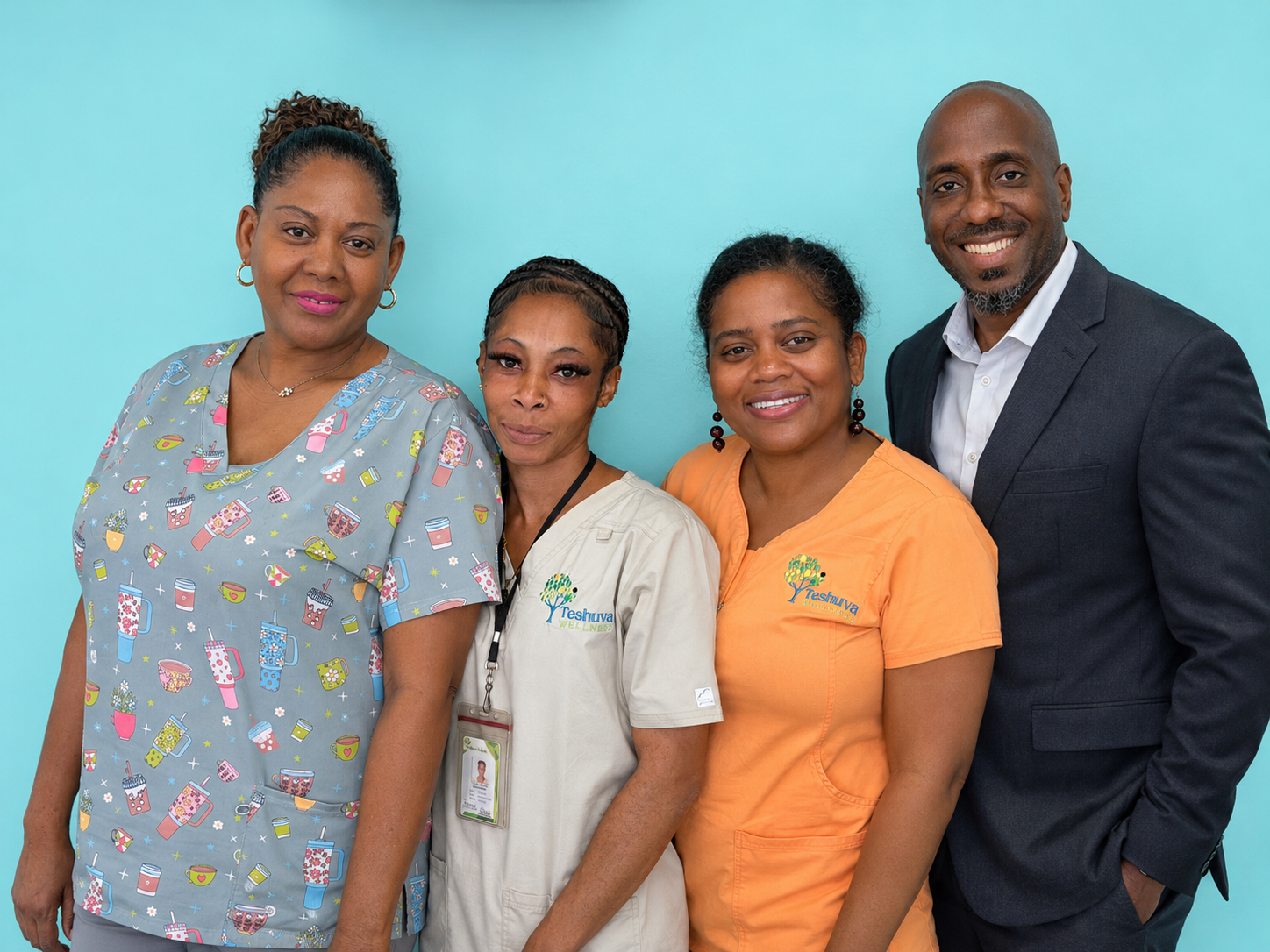
Care happens in a real place, with real people.


Take the right questions with you.
Questions to Bring to Your Breast Cancer Appointment. A simple checklist to help you organise the questions you may want to discuss with your cancer-care team.
Questions people ask before a breast cancer consultation.
Related Cancer Care at Teshuva Wellness

Cancer Second Opinion
An independent review of your diagnosis, reports or current treatment plan.
ExploreIntegrative Oncology Support
Physician-led supportive care that works alongside your conventional treatment.
ExploreCancer Recovery & Side Effects
Restoring energy, easing lingering effects and supporting your body after treatment.
ExploreCancer Care Hub
Explore the full range of physician-led cancer consultations and support.
ExploreVisit Teshuva Wellness in Montego Bay.
Teshuva Wellness
Shop 7A, Sagicor Commercial Centre
Howard Cooke Boulevard
Montego Bay, Jamaica
Monday – Friday: 9:00 AM – 5:00 PM
You do not have to understand everything before you ask for help.
Bring the reports, the treatment plan and the questions you are carrying. In person in Montego Bay or virtually by Zoom.